
Metal-free crowns
Zirconium crowns in Antalya, Turkey
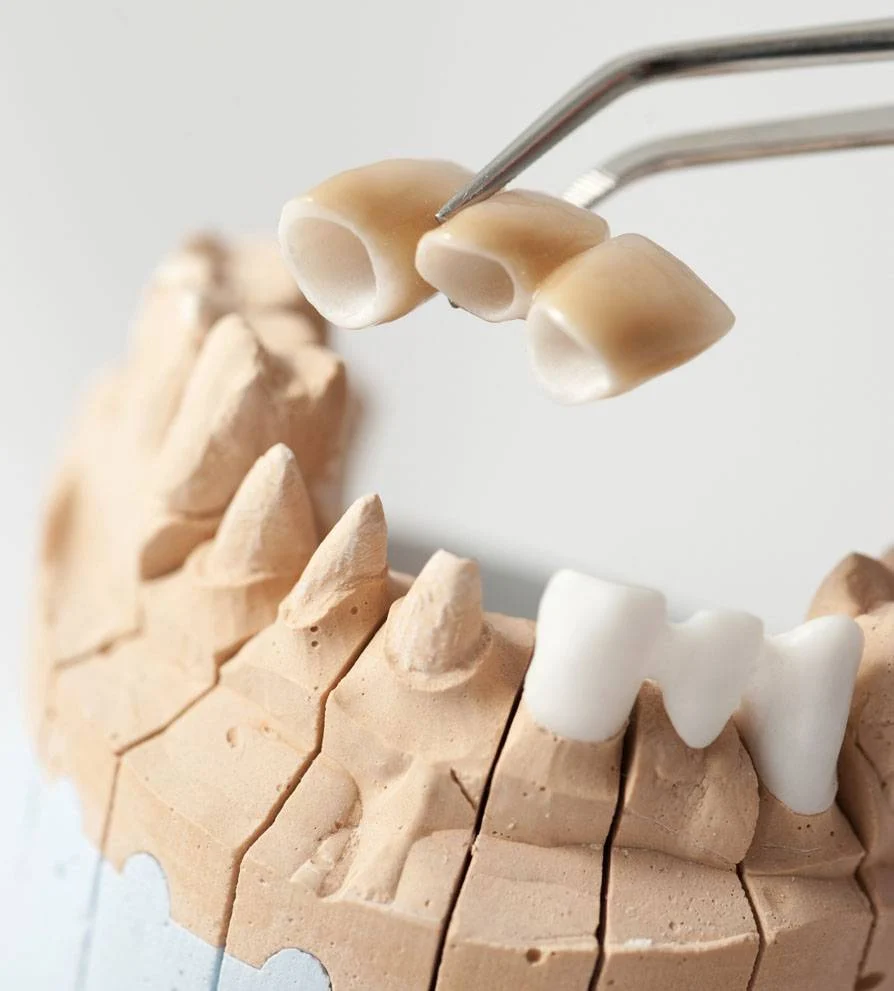
A zirconium crown is a metal-free cap that covers and protects the whole tooth. Zirconia is a very strong dental ceramic, and unlike porcelain-fused-to-metal crowns it does not leave a dark line at the gum.
Medically reviewed by Dt. Anıl Fuat Çiftçibaşı ·
- Stay in Antalya
- 5–7 days
- Visits
- 2
- Metal
- None
- Anaesthesia
- Local
- Lifespan
- 15+ years
- Also on implants
- Yes
It is the usual choice for teeth that are broken, heavily filled or treated with a root canal. Treatment takes 5–7 days in Antalya; because a crown removes more tooth than a veneer, it is used where a tooth needs it.
When a tooth needs a crown
A crown covers the whole tooth down to the gum and holds it together. We recommend zirconium crowns when a tooth:
- has large fillings or is broken
- has had a root canal treatment and has become brittle or grey
- is cracked, which can cause pain when biting
- is strongly rotated or out of line
- is a back tooth that takes heavy chewing forces and has lost much of its structure
- already has an old crown that needs replacing
- sits on a dental implant
A healthy tooth that only needs a change of colour or shape usually does not need a crown. A veneer, composite bonding or whitening keeps more of your natural tooth.
Filling, onlay, veneer or crown?
| Filling | Onlay | Veneer | Crown | |
|---|---|---|---|---|
| Covers | The cavity only | Part of the biting surface, including cusps | The front surface | The whole tooth |
| Tooth removed | Only the decay | Moderate; healthy walls kept | 0.3–0.7 mm of enamel | About 1–2 mm all round |
| Made | Directly in the mouth | In the laboratory | In the laboratory | In the laboratory |
| Suits | Small to medium cavities | Back teeth with large damage but sound side walls | Colour and shape of healthy front teeth | Weak, broken or root-canal-treated teeth, implants |
| Typical lifespan | 5–10 years | 10–15 years | 10–15+ years | 15+ years |
The principle is to remove as little tooth as possible while giving it a restoration that will hold. When a back tooth has a large cavity but strong side walls, an onlay can protect the cusps without cutting the tooth down all round. When most of the tooth is already filling, a crown is the more predictable choice. Your dentist explains the choice for each tooth on the X-ray.
Monolithic zirconia, layered zirconia or E-max crowns?
| Monolithic zirconia | Layered zirconia | E-max crown | |
|---|---|---|---|
| Structure | One piece of zirconia, often with graded colour | Zirconia core with hand-layered porcelain | One piece of lithium disilicate glass-ceramic |
| Look | Natural; slightly less translucent | Lifelike depth and translucency | Translucent, close to natural enamel |
| Strength | Very high | High core; porcelain layer weaker | High, below zirconia |
| Chipping | Rare, no porcelain layer | Porcelain can chip | Possible under heavy load |
| Wear on opposing teeth | Low when well polished | Porcelain can wear opposing teeth more | Low |
| Typical use | Back teeth, grinders, bridges, implants | Front teeth where looks come first | Front teeth and premolars |
Many smiles combine them: monolithic zirconia on the back teeth for strength, layered zirconia or E-max on the front teeth for the look. Your plan states the material for each tooth.
Crowns on root-canal-treated teeth
After a root canal treatment a tooth has lost its pulp, part of its structure to the access opening, and often more to earlier decay. It becomes more brittle. Back teeth in particular can split under chewing forces, so a crown or an onlay that covers the cusps is usually recommended after a root canal treatment. A front tooth with only a small opening may need just a filling, or internal whitening if it has turned grey.
- The root canal filling is checked on an X-ray first. If it is incomplete or there is infection, it is treated or redone before the crown.
- If little tooth is left above the gum, it is rebuilt first with a core, sometimes anchored by a post in the root.
- A crown needs a band of healthy tooth above the gum to grip. If there is not enough, an extraction and an implant may be more predictable, and your dentist tells you so.
Bridges: crowns that replace a missing tooth
A bridge is two or more crowns joined together, with a false tooth in the gap between them. Zirconia is well suited to bridges because of its strength. The disadvantage is that the neighbouring teeth have to be prepared for crowns, so a bridge makes most sense when those teeth already need crowns. When they are healthy, an implant replaces the missing tooth without touching them. See dental bridges.
Your 5–7 days in Antalya
- Day 1: examination and X-rays to check roots and nerves, photos and your final plan. Decay, root canal or gum treatment needed first is started.
- Day 2: preparation of the teeth under local anaesthesia, digital scan and temporary crowns.
- Day 3–5: your crowns are made in the laboratory in 3–4 days. Free days for the beach.
- Day 5–6: try-in for fit, shape and colour, then permanent cementation.
- Day 7: bite check, polishing of any adjusted surface and your aftercare kit.
Crowns on implants follow the implant timeline: they are fitted on the second trip, after the implant has healed. If several root canal treatments are needed first, your plan states whether extra days are required.
Sensitivity after a crown
Some sensitivity to cold or pressure for a few days to a few weeks is common, especially on teeth that were deeply filled before. It usually fades on its own; a toothpaste for sensitive teeth helps. A crown that feels high when you bite is adjusted, because a high spot keeps the tooth sore.
Contact us and see a dentist if pain gets worse instead of better, throbs, wakes you at night, or comes with swelling. This can mean the nerve is inflamed and needs a root canal treatment, which in many cases can be done through the crown.
What affects the cost
- The number of crowns, and whether some teeth can have veneers or onlays instead
- The material: monolithic zirconia, layered zirconia or E-max
- Build-ups or posts for weakened teeth
- Root canal, gum or other treatment needed first
- Crowns on implants, which need an abutment
Your written plan lists each tooth, the material, the number of days and the total price before you travel. See prices.
Risks and disadvantages
- More tooth is removed than for a veneer or onlay, about 1–2 mm all round. The change is permanent.
- The nerve may later need treatment. In a small proportion of living teeth that receive crowns, the nerve becomes inflamed months or years later and needs a root canal treatment. The risk is higher in teeth that already had deep fillings.
- Decay at the edge. The crown itself cannot decay, but the tooth at its edge can if plaque is left there.
- Gum changes. The gum can recede over the years and expose the edge of the crown.
- Chipping. The porcelain layer of a layered crown can chip; monolithic zirconia rarely does.
- Hard to adjust or remove. Zirconia is hard to cut, so replacing a crown means cutting it off. Any adjusted surface must be polished again to protect the opposing teeth.
- Colour is fixed. A crown does not whiten with your natural teeth.
Aftercare, lifespan and your dentist at home
- Brush twice a day and clean between the teeth daily, especially at the edge of the crown.
- Avoid biting very hard objects such as ice, nutshells or bones.
- Wear a night guard if you grind your teeth.
- Keep yearly check-ups, so the edges and gums are checked on X-ray.
Your report lists the teeth treated, the material of each crown and your X-rays, so your dentist at home knows what is in your mouth. If a crown ever needs adjusting, it should be polished afterwards; layered porcelain should not be treated with acidulated fluoride gels.
With good care, zirconium crowns typically last 15 years or more. The most common reasons for replacement are decay at the edge, gum recession and, for layered crowns, chipping, so daily cleaning and regular check-ups matter more than the crown itself.
Your written plan
Lumos Dental Clinic, Antalya
- Treatment
- Zirconium crowns
- Teeth
- —
- Time in Antalya
- 5–7 days
- Materials
- Named in your plan
- Fixed price
- Sent after a dentist sees your photos
Included: consultation, 3D X-ray, airport and hotel transfers, written guarantee.
Send three photos: your smile, your upper teeth and your lower teeth.
How it works
Four steps from your photos to your treatment
- 1
Send your photos
Share a few smile photos or an X-ray through our form or on WhatsApp.
- 2
Get your plan and price
Our dentists reply within 24 hours with a personal treatment plan, a fixed price and how many days you need.
- 3
Fly to Antalya
We pick you up at Antalya Airport and drive you between your hotel and the clinic.
- 4
Aftercare at home
You fly home with a written guarantee and our team stays in touch for follow-up.
Zirconium crowns: frequently asked questions
How long do zirconium crowns last?
With good care, zirconium crowns typically last 15 years or more. They resist chipping and do not stain; the tooth at the edge of the crown still needs daily cleaning.
Do zirconium crowns look natural?
Yes. Modern multilayer zirconia has a natural gradient of colour and translucency. For the front teeth we often use zirconia layered with porcelain or choose E-max for a more lifelike result.
Do I need a crown or a veneer?
A veneer suits a healthy front tooth that needs a change of colour or shape. A crown suits a tooth that is broken, heavily filled, cracked or root-canal-treated. Your plan states the choice and the reason for each tooth.
Is the tooth under a crown still alive?
Usually yes. A crown does not require a root canal treatment. If the nerve is already damaged or infected, it is treated before the crown is made.
Does a root-canal-treated tooth always need a crown?
Not always. Back teeth usually need a crown or an onlay covering the cusps because they can split. A front tooth with little lost structure may need only a filling, or internal whitening if it has darkened.
Does getting a crown hurt?
The tooth is prepared under local anaesthesia, which numbs the area; most patients feel pressure rather than pain. Some sensitivity for a few days is common afterwards and usually fades on its own.
Can a zirconium crown be whitened?
No. Whitening works only on natural teeth. If you want whiter teeth, whiten before your crowns are made so the crown shade matches the result.
Patient reviews
What our patients say on Google
Related treatments
You may also be interested in
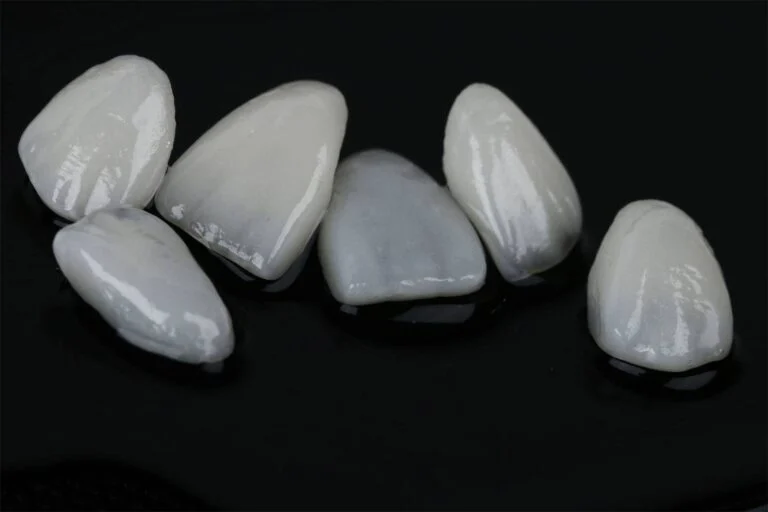
Veneers
Thin porcelain shells that change the colour and shape of your front teeth with minimal preparation.Learn more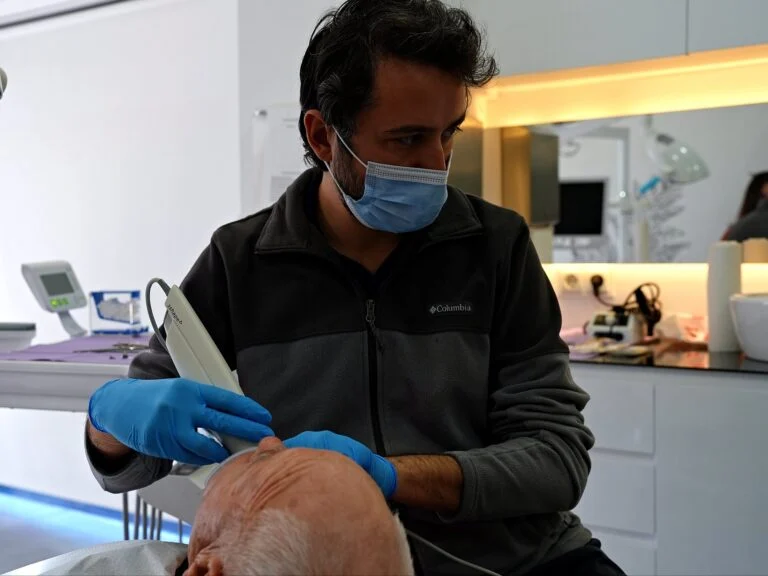
Dental bridges
A fixed row of crowns that fills a gap, held by the neighbouring teeth or by implants.Learn more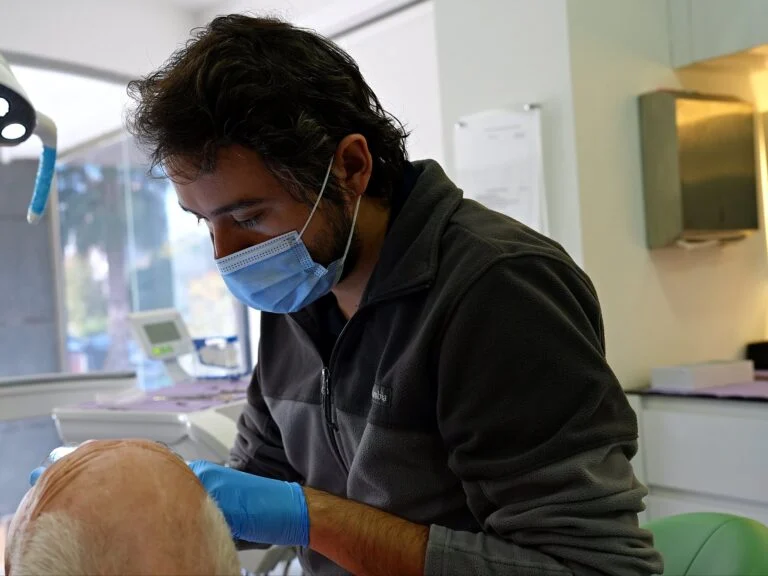
Root canal treatment
Removes the inflamed or infected pulp so you can keep your tooth, in 1–2 visits under local anaesthesia.Learn moreFree photo assessment
Get your personal treatment plan and price
Tell us what you would like to change and add a few photos. A dentist — not a sales agent — reviews your case and replies within 24 hours.
- Free and without obligation
- Fixed price in writing before you travel
- Reply in English, German, Russian or Turkish
- Your photos are used only for your treatment plan