
Fixed replacement for missing teeth
Dental bridges in Antalya
A dental bridge replaces one or more missing teeth with a fixed row of crowns: the false tooth in the gap is held by crowns on the teeth either side, or by implants. A conventional bridge takes 5–7 days in Antalya. Its main disadvantage is that the neighbouring teeth must be reshaped for crowns, which is why your plan compares it with an implant.
Medically reviewed by Dt. Anıl Fuat Çiftçibaşı ·
- Stay in Antalya
- 5–7 days
- Visits
- 2
- Materials
- Zirconia or porcelain
- Anaesthesia
- Local
- Lifespan
- Typically 10–15 years
- On implants
- Yes, in 2 trips
How a bridge works
A bridge has two parts: the supporting teeth (or implants) on either side of the gap, which receive crowns, and the false tooth that sits on the gum between them. The most common bridge has three units and replaces one missing tooth. The parts are made in one piece and cemented, so you do not take the bridge out.
Two variants exist for special cases. A cantilever bridge is held on one side only and suits small front teeth with light biting forces. A resin-bonded bridge is glued to the back of the neighbouring teeth with a thin wing and needs very little drilling, but it comes loose more often and is used mainly for a single front tooth.
Bridge, implant bridge or single implants?
| Conventional bridge | Implant-supported bridge | Single implants | |
|---|---|---|---|
| Neighbouring teeth | Reshaped for crowns | Not touched | Not touched |
| Surgery | No | Yes | Yes |
| Trips to Antalya | 1 trip, 5–7 days | 2 trips: 3–5 + 5–7 days | 2 trips: 3–5 + 5–7 days |
| Bone under the gap | Keeps shrinking slowly | Loaded by the implants | Loaded by the implants |
| Cleaning | Under the bridge, daily | Under the bridge, daily | Like natural teeth |
| Suits | Neighbours already crowned or heavily filled; implants not possible or not wanted | Three or more missing teeth in a row | One or two missing teeth with healthy neighbours |
A practical rule: if the teeth next to the gap already have large fillings or crowns, a bridge costs them little extra structure. If they are healthy, a dental implant spares them. An implant-supported bridge also allows, for example, two implants to carry three teeth.
Materials: zirconia or porcelain
- Zirconia — strong and metal-free, suitable for back teeth and longer bridges. For front teeth it can be layered with porcelain for more translucency. See zirconium crowns.
- Glass-ceramic (E-max, lithium disilicate) — very natural in colour but less strong, so it is limited to short bridges in the front of the mouth.
- Porcelain fused to metal — the older standard. Strong, but the porcelain can chip and a grey line can appear at the gum over time.
Your plan states which material is used for each bridge and why.
The main disadvantage: preparing the neighbouring teeth
To make room for the crowns, about 1–2 mm of tooth is removed all round each supporting tooth. This cannot be reversed. In studies a small share of prepared teeth, roughly 5–15 % over ten years or more, later need root canal treatment because the nerve reacts. And because the bridge is one piece, a problem with one supporting tooth, such as decay or a fracture, usually means the whole bridge has to be replaced.
Other disadvantages: the bone under the false tooth continues to shrink slowly, the supporting teeth can be sensitive to cold for a few days or weeks after preparation, and porcelain layers can chip.
Your 5–7 days in Antalya
- Day 1: examination, X-ray and final plan. Any decay, root canal or gum problem in the supporting teeth is treated first.
- Day 2: preparation of the supporting teeth under local anaesthesia, digital scan and a temporary bridge.
- Day 3–5: the laboratory makes your bridge.
- Day 5–6: try-in, adjustments and cementation.
- Day 7: bite check and cleaning instructions.
A bridge on implants needs two trips: 3–5 days to place the implants and 5–7 days for the final bridge 3–6 months later, with a temporary in between where the gap is visible.
Cleaning under a bridge
Decay at the edges of the supporting crowns and gum disease are the most common reasons bridges fail, and both start with plaque under the false tooth. Every day:
- thread floss under the bridge with a floss threader, or use a thicker floss with a stiff end
- use interdental brushes at both ends of the bridge
- a water flosser helps if threading floss is difficult
- brush twice a day with a fluoride toothpaste
See a dentist at least once a year for a check-up, cleaning and, from time to time, an X-ray of the supporting teeth.
How long a bridge lasts and what affects the cost
A well-made bridge on healthy supporting teeth typically lasts 10–15 years, and many last longer. Daily cleaning under the bridge, a night guard if you grind your teeth and regular check-ups make the largest difference.
The cost depends on the number of units, the material, whether the bridge sits on teeth or implants, and any treatment needed first, such as root canal treatment, gum treatment or a bone graft. See prices.
How it works
From the first photo to your new smile
- 1
Send your photos
Share a few smile photos or an X-ray through our form or on WhatsApp.
- 2
Get your plan and price
Our dentists reply within 24 hours with a personal treatment plan, a fixed price and how many days you need.
- 3
Fly to Antalya
We pick you up at Antalya Airport and drive you between your hotel and the clinic.
- 4
Smile, with aftercare
You fly home with a written guarantee and our team stays in touch for follow-up.
Dental bridges: frequently asked questions
How many teeth can a bridge replace?
On natural teeth, usually one or two missing teeth in a row. Longer gaps need more supporting teeth or implants, because the forces on the supporting teeth increase with every missing tooth.
Should I choose a bridge or an implant?
If the teeth next to the gap are healthy, an implant spares them and is usually the more conservative choice. If they already have large fillings or crowns, or if implant surgery is not possible, a bridge is a sound option.
Does getting a bridge hurt?
The supporting teeth are prepared under local anaesthesia, so you feel pressure but no pain. Some sensitivity to cold for a few days or weeks afterwards is common.
How do I clean under a bridge?
Thread floss under the false tooth with a floss threader or use a thicker floss with a stiff end, and clean both ends with interdental brushes. A water flosser is a good addition.
How long does a dental bridge last?
Typically 10–15 years, often longer with good cleaning and regular check-ups. Bridges most often fail because of decay at the edge of a supporting crown, not because the bridge itself breaks.
Can a bridge be made in one trip?
A conventional bridge, yes: 5–7 days in Antalya. A bridge on implants needs two trips, 3–6 months apart, so the implants can heal into the bone first.
What happens if a supporting tooth has a problem later?
Small decay at the edge can sometimes be repaired. If a supporting tooth needs root canal treatment, it can often be done through the crown; if the tooth fractures, the bridge usually has to be remade, sometimes on an implant instead.
Patient reviews
What our patients say on Google
Related treatments
You may also be interested in
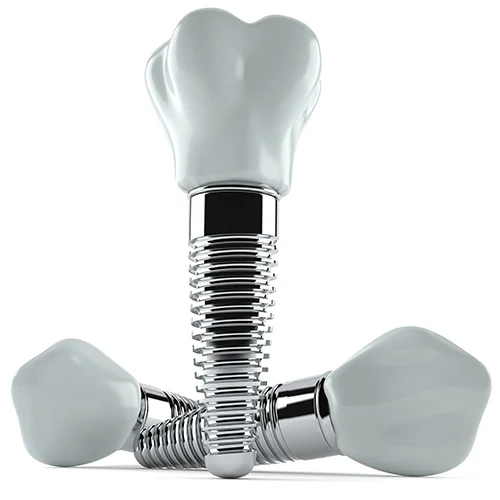
Dental implants
Replace one, several or all missing teeth with fixed teeth that look, feel and chew like your own.Learn more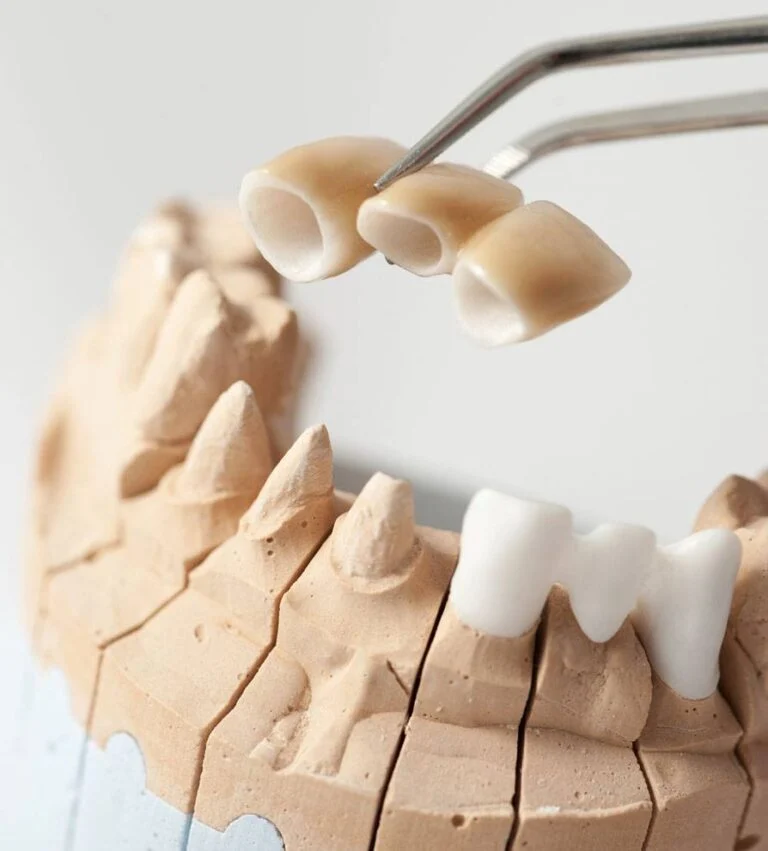
Zirconium crowns
Strong, metal-free crowns for broken, heavily filled or root-canal-treated teeth.Learn more
Dentures
Full, partial or implant-retained removable teeth, made over several fittings and adjusted to your mouth.Learn moreFree consultation
Get your personal treatment plan and price
Tell us what you would like to change and add a few photos. A dentist — not a sales agent — reviews your case and replies within 24 hours.
- Free and without obligation
- Fixed price in writing before you travel
- Reply in English, German, Russian or Turkish
- Your photos are used only for your treatment plan