
Keeping your own tooth
Root canal treatment in Antalya
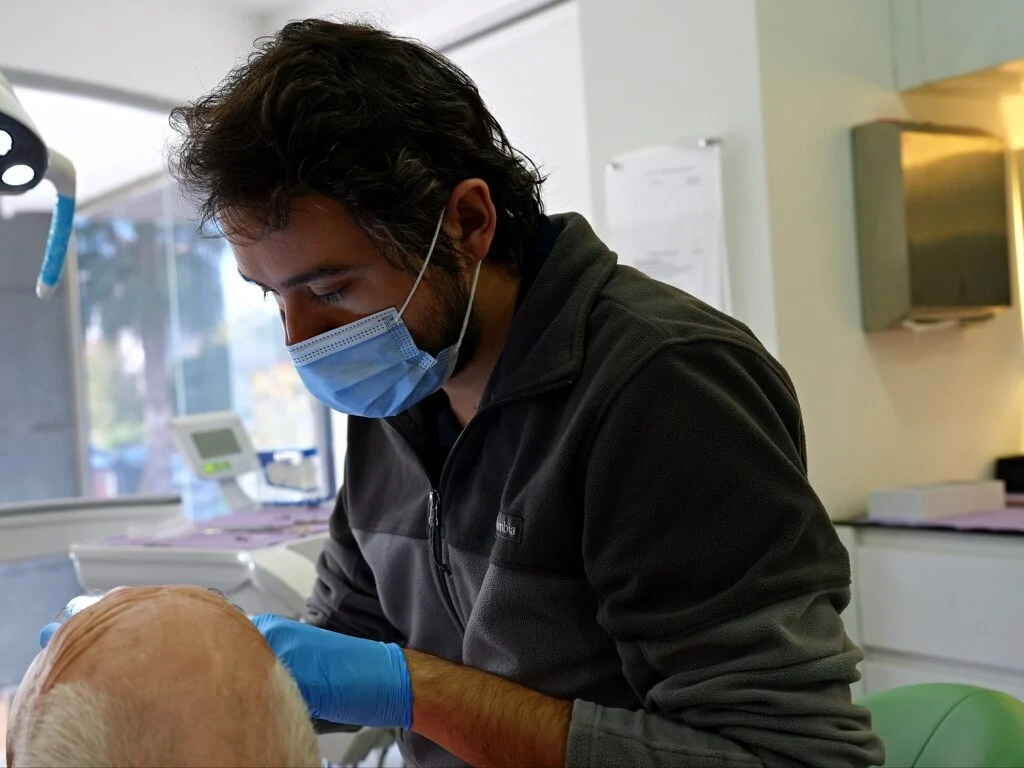
Root canal treatment removes the inflamed or infected pulp from inside a tooth, cleans and disinfects the canals and seals them, so that you can keep the tooth instead of having it extracted. It is done under local anaesthesia in 1–2 visits. Back teeth usually need a crown afterwards to protect them from breaking.
Medically reviewed by Dt. Anıl Fuat Çiftçibaşı ·
- Visits
- 1–2
- Each visit
- About 60–90 minutes
- Anaesthesia
- Local
- Crown afterwards
- Usually, on back teeth
- In function after 5–10 years
- About 85–95 %
- Back to work
- Same or next day
Signs you may need a root canal treatment
The pulp is the soft tissue with nerves and blood vessels inside the tooth. Deep decay, a crack or an old, deep filling can let bacteria reach it. Typical signs are:
- pain from hot or cold that lingers for minutes after the drink is gone
- throbbing pain that wakes you at night
- pain when you bite or touch the tooth
- swelling, or a small pimple on the gum that releases pus
- a tooth that has turned darker than its neighbours
Sometimes there are no symptoms at all and the infection is found on an X-ray. Not every toothache means a root canal: short sensitivity that stops within seconds often comes from exposed dentine or a small cavity. Your dentist decides after testing the tooth and looking at the X-ray.
How the treatment works, step by step
- Diagnosis: examination, tests of the tooth and an X-ray. Where the roots are curved or the anatomy is unclear, a 3D scan shows the canals.
- Anaesthesia and isolation: the tooth is numbed and a thin rubber sheet is placed around it to keep it dry and clean.
- Cleaning: a small opening is made in the top of the tooth, the pulp is removed, and each canal is measured, shaped with fine files and rinsed with disinfecting solutions.
- Filling: the canals are sealed with a rubber-like material (gutta-percha) and a sealer, and the result is checked on an X-ray.
- Restoring: the opening is closed with a filling. Back teeth usually receive a crown.
One visit or two?
When the pulp is inflamed but not yet infected, the treatment can often be finished in one visit. When there is an infection or an abscess at the root tip, the canals are usually cleaned, filled with an antibacterial dressing for a few days to two weeks and sealed at a second visit. Antibiotics are not routinely needed; they are used when an infection spreads, for example with facial swelling or fever.
For patients who travel, the visits are planned within your stay, often alongside crowns. If a tooth needs a longer interval, your dentist tells you before starting.
Why a crown usually follows
After treatment the tooth has lost its living pulp and often a lot of its structure through decay and the access opening. Molars and premolars carry heavy chewing forces and are more likely to crack; studies show that root-canal-treated back teeth last longer when they are covered with a crown. Front teeth with little damage often need only a filling.
A zirconium crown takes 5–7 days in Antalya and can be made in the same trip. Sometimes a post is placed inside the root to hold the core of the crown. Until the crown is fitted, avoid biting hard food on that side.
Will the tooth change colour?
A root-canal-treated tooth can slowly turn grey over the years, because the dentine no longer has a blood supply. The colour alone does not mean the treatment failed. Internal whitening often brings the colour back; if it does not, a veneer or crown matches the tooth to its neighbours.
Success rates and retreatment
In studies, around 85–95 % of root-canal-treated teeth are still in function after 5–10 years. The result is more predictable when there was no infection at the root tip beforehand, when the canals are sealed well and when the tooth is protected with a crown. Cracks running into the root lower the chances considerably.
When an old root canal treatment fails
An earlier treatment can become reinfected, for example when the filling leaks, a canal was missed or the seal was too short. In a retreatment the old filling material is removed and the canals are cleaned and sealed again. Success is lower than for a first treatment, typically around 70–85 %. If the tooth has a crown, it often has to be removed to reach the canals and replaced afterwards. In selected cases a small operation at the root tip (apicoectomy) is an alternative.
Root canal treatment or extraction and an implant?
| Root canal treatment | Extraction and implant | |
|---|---|---|
| Your own tooth | Kept | Replaced |
| Surgery | No | Yes |
| Time | 1–2 visits, plus a crown in 5–7 days | 2 trips: 3–5 + 5–7 days, 3–6 months apart |
| Long-term figures | About 85–95 % in function after 5–10 years | 95–98 % of implants in function after 10 years |
| Suits | A tooth that can be restored, with healthy gums and bone | A tooth cracked into the root, too decayed to restore or after a failed retreatment |
The figures come from different studies and are not directly comparable. When a tooth can be restored predictably, we keep it. When it cannot, extraction and an implant or a bridge are the alternative, and your plan explains why.
Risks and disadvantages
- Tenderness when biting for 2–3 days is common.
- In a small share of cases a flare-up with pain and swelling occurs in the first days.
- Very curved or calcified canals cannot always be cleaned to their full length.
- A fine instrument can break inside a narrow canal.
- The tooth becomes more brittle and can crack later, especially without a crown.
- If the infection does not heal, retreatment or extraction is needed.
The cost depends on the number of canals (front teeth usually have one, molars three or four), whether it is a first treatment or a retreatment, and whether a post and crown are needed. See prices for what is included.
Aftercare
- Do not eat until the numbness has worn off.
- Ordinary painkillers are enough for most patients for 2–3 days.
- Chew on the other side until the permanent filling or crown is in place.
- Brush and clean between the teeth as usual.
- Contact us if swelling increases, you develop a fever or the pain gets worse after the third day.
Your report includes the X-rays and what was done to each tooth. Ask your dentist at home for a check X-ray after 6–12 months to confirm that the area around the root has healed.
How it works
From the first photo to your new smile
- 1
Send your photos
Share a few smile photos or an X-ray through our form or on WhatsApp.
- 2
Get your plan and price
Our dentists reply within 24 hours with a personal treatment plan, a fixed price and how many days you need.
- 3
Fly to Antalya
We pick you up at Antalya Airport and drive you between your hotel and the clinic.
- 4
Smile, with aftercare
You fly home with a written guarantee and our team stays in touch for follow-up.
Root canal treatment: frequently asked questions
Does root canal treatment hurt?
The treatment is done under local anaesthesia, so you feel pressure and vibration rather than pain. Afterwards the tooth is often tender when biting for 2–3 days, which ordinary painkillers usually control.
How many visits does a root canal treatment take?
One or two. A tooth without infection at the root tip can often be finished in one visit; an infected tooth usually needs a second visit after a few days to two weeks.
Do I always need a crown after a root canal treatment?
Not always. Back teeth usually need one because they carry heavy chewing forces and crack more easily. Front teeth with little damage can often be restored with a filling.
Can I fly after root canal treatment?
Yes, from the same or the next day. A treated and sealed tooth is not affected by cabin pressure, whereas an untreated infected tooth can hurt more during a flight.
How long does a root-canal-treated tooth last?
Studies report that about 85–95 % are still in function after 5–10 years, and many last for decades. A good seal, a crown on back teeth and regular check-ups make the largest difference.
Is it better to extract the tooth and have an implant?
Not when the tooth can be restored predictably: keeping your own tooth avoids surgery and is usually simpler. Extraction and an implant make sense when the tooth is cracked into the root, too decayed to rebuild or has failed a retreatment.
Why has my root-canal-treated tooth turned grey?
Without a blood supply the dentine slowly changes colour. This is usually a cosmetic problem rather than a sign of failure, and it can be corrected with internal whitening, a veneer or a crown.
Can a failed root canal be treated again?
Often yes. The old filling is removed and the canals are cleaned and sealed again, with a success rate typically around 70–85 %. If that is not possible, a root-tip operation or extraction is the alternative.
Patient reviews
What our patients say on Google
Related treatments
You may also be interested in
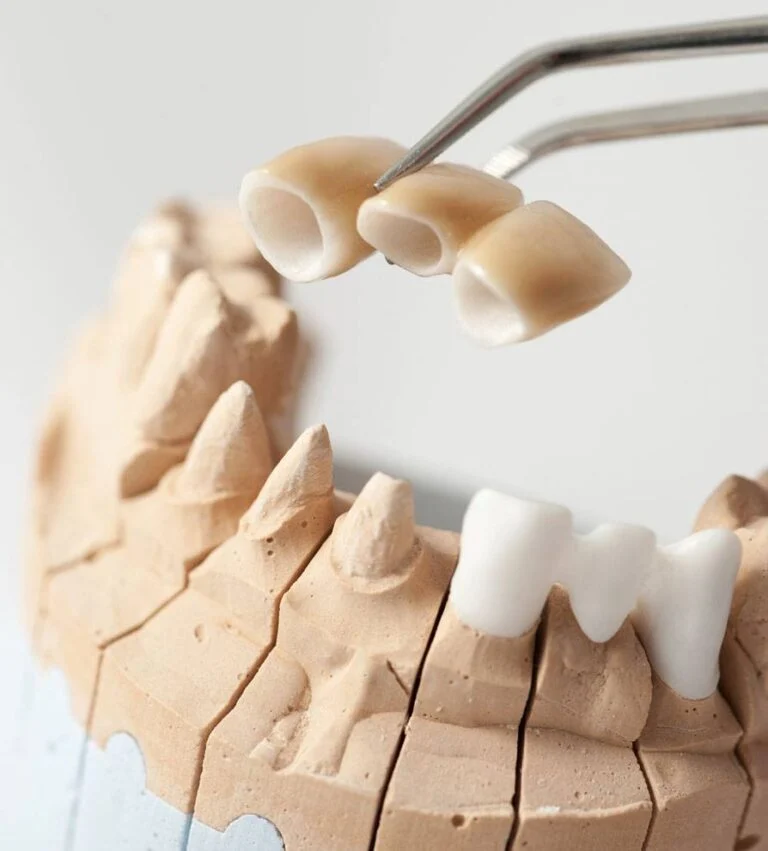
Zirconium crowns
Strong, metal-free crowns for broken, heavily filled or root-canal-treated teeth.Learn more
Tooth extraction
Simple and surgical extractions, including wisdom teeth, planned on an X-ray or 3D scan.Learn more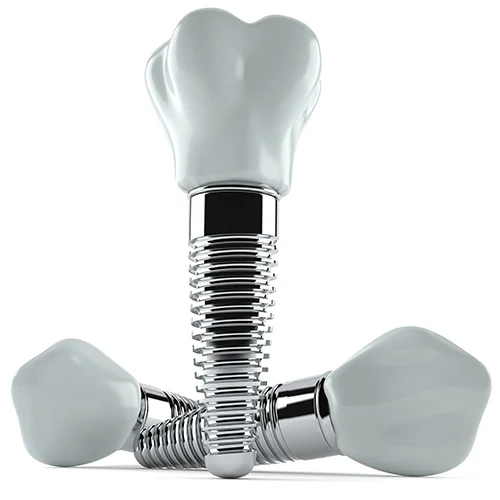
Dental implants
Replace one, several or all missing teeth with fixed teeth that look, feel and chew like your own.Learn moreFree consultation
Get your personal treatment plan and price
Tell us what you would like to change and add a few photos. A dentist — not a sales agent — reviews your case and replies within 24 hours.
- Free and without obligation
- Fixed price in writing before you travel
- Reply in English, German, Russian or Turkish
- Your photos are used only for your treatment plan