
Full-arch implant treatment
All-on-4 and All-on-6 dental implants in Antalya, Turkey
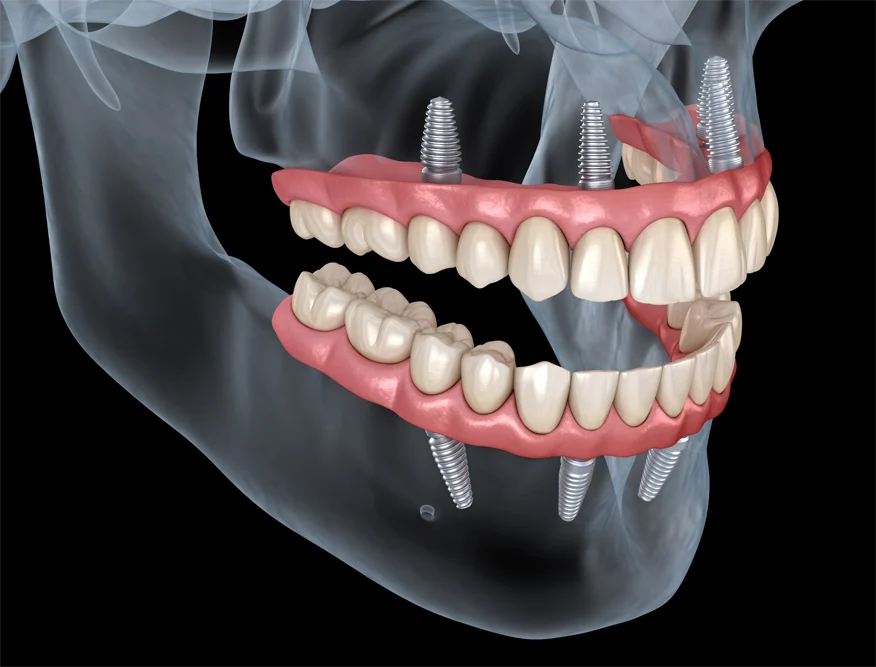
All-on-4 replaces all the teeth of one jaw with a fixed bridge held by four implants; All-on-6 uses six.
Medically reviewed by Uzm. Dt. Mehmet Ercan ·
- Implants per jaw
- 4 or 6
- First trip
- 5–7 days
- Fixed teeth
- In 2–3 days
- Second trip
- 5–7 days
- Anaesthesia
- Local
- Removable?
- No, fixed
The back implants are placed at an angle to use the denser bone at the front of the jaw, so bone grafting is often not needed. You leave the first trip of 5–7 days with fixed temporary teeth and return 3–6 months later for the final bridge.
What All-on-4 is
All-on-4 is a full-arch implant bridge: one fixed set of 10–12 teeth for the upper or lower jaw, screwed onto four implants. The two front implants stand upright; the two back implants are tilted. Tilting lets a longer implant use the dense bone at the front of the jaw while avoiding the sinus in the upper jaw and the nerve in the lower jaw.
All-on-6 works the same way with six implants. You do not take the bridge out; only your dentist removes it for cleaning or repairs. Where bone and gum have been lost, a gum-coloured part restores lip support.
Who is a candidate, and who is not
All-on-4 suits:
- People who have lost most or all of the teeth in one or both jaws
- People whose remaining teeth are loose or failing because of advanced gum disease
- Denture wearers who want fixed teeth that do not move
- Patients told elsewhere that they do not have enough bone for implants
Extra care, a letter from your doctor or a different plan may be needed if you:
- smoke — smoking raises the risk of implant failure and of gum infection around implants
- have diabetes that is not well controlled
- take or have taken bisphosphonates or similar bone medication, or have had radiotherapy to the head and neck
- have active gum disease in the opposite jaw, which is treated first
- would find daily cleaning under a bridge difficult, for example because of limited hand movement
When a more conservative option is better
If several of your teeth are still healthy or can be saved with gum treatment, keeping them and replacing the gaps with single implants or bridges may be the better plan. Extracting teeth that could be kept is a one-way decision. A periodontist assesses each tooth on the 3D scan before recommending a full arch.
In a small number of cases the bone is too limited even for tilted implants. A bone graft or sinus lift is then discussed, which lengthens healing.
All-on-4, All-on-6, overdenture or denture?
| All-on-4 | All-on-6 | Implant-supported overdenture | Conventional denture | |
|---|---|---|---|---|
| Implants per jaw | 4 | 6 | Usually 2–4 | 0 |
| Fixed or removable | Fixed | Fixed | Removable, clicks onto implants | Removable |
| Covers the palate (upper jaw) | No | No | Often not | Yes |
| Chewing | Near natural | Near natural | Good, more stable than a denture | Limited |
| Bone loss | Slowed | Slowed | Slowed around the implants | Continues |
| Bone grafting | Rarely needed | Sometimes needed | Rarely needed | Not needed |
| Daily cleaning | Brush, water flosser under the bridge | Brush, water flosser under the bridge | Take out and clean, clean the implant attachments | Take out and clean |
| Relative cost | Medium | Higher | Lower | Lowest |
All-on-4 suits reduced bone, especially in the lower jaw. All-on-6 suits good bone volume, the upper jaw and a strong bite, and leaves more reserve if one implant ever has a problem. An overdenture is a middle way when budget matters most, and a conventional denture needs no surgery. Your periodontist decides on the 3D scan which option gives your teeth secure support.
Your two trips to Antalya
First trip: 5–7 days
- Day 1: examination, 3D cone-beam CT scan and final digital plan with your periodontist. Records are taken for your temporary bridge.
- Day 2: extraction of failing teeth and placement of the implants under local anaesthesia, about 2–3 hours per jaw.
- Day 3–4: your fixed temporary bridge is screwed onto the implants.
- Day 5–7: check-up, bite adjustment and cleaning instructions.
Healing at home: 3–6 months
The implants fuse with the bone while you wear the temporary bridge. You eat soft food, clean carefully and stay in touch with your coordinator; a photo or an X-ray from your dentist at home helps us confirm the date of your second trip.
Second trip: 5–7 days
Your periodontist checks the implants and takes digital impressions. A try-in lets you and your dentist check the tooth shape, shade, bite, lip support and speech before the final bridge in zirconia or acrylic on a titanium frame is made and fitted. A bite check and cleaning lesson end the visit.
Temporary and final bridge materials
The temporary bridge fitted on the first trip is usually made of acrylic resin. It is light and easy to adjust while the gums and bone heal, but it is not built for years of hard chewing, so you eat soft food until the final bridge is fitted.
| Final bridge | Acrylic teeth on a titanium frame | Zirconia (on titanium bases) |
|---|---|---|
| Look | Good; can dull and stain slowly | Natural, does not stain |
| Feel when biting | Slightly softer, lighter | Hard, rigid |
| Wear | Teeth wear down over the years | Very little wear |
| If something breaks | Teeth can be repaired or replaced on the same frame | Repair is limited; a fracture may mean a new bridge |
| Typical lifespan | Teeth often renewed after 5–10 years; frame lasts longer | Often 15–20 years |
| Relative cost | Lower | Higher |
Zirconia suits patients who want a durable, stain-free bridge. Acrylic on titanium can suit heavy grinders, an opposing denture, or a tighter budget. Your plan states which material is used and why.
Cleaning under the bridge
Plaque collects between the bridge and the gum; cleaning there daily keeps the implants healthy.
- Brush the bridge twice a day with a soft or electric toothbrush, angled towards the gum.
- Use a water flosser under the whole bridge once a day.
- Clean around each implant with an interdental brush in the right size or with threaded floss (super floss).
- A small single-tuft brush reaches the back implants.
- Have the bridge removed and professionally cleaned once or twice a year, as your dentist advises.
Bleeding, a bad taste or swelling around an implant is a warning sign: send your coordinator a photo and see a dentist.
Risks and disadvantages
After surgery
Swelling, bruising and soreness for 3–5 days are expected. In the lower jaw there is a small risk of temporary or lasting numbness of the lip if a nerve is irritated; implant positions are planned on the 3D scan to keep a safe distance.
Implant failure
In about 2–5 % of cases an implant does not fuse with the bone. It is removed and replaced after healing; with All-on-6 the bridge may still be supported in the meantime. Your written plan explains how this is handled.
Peri-implantitis
Peri-implantitis is an infection of the gum and bone around an implant, similar to gum disease around natural teeth. Over years it can cause bone loss and, if untreated, the loss of the implant. The main risks are plaque left under the bridge, smoking, poorly controlled diabetes and a history of gum disease. Early signs are bleeding, swelling and pus around an implant. Daily cleaning and regular check-ups are the main protection, and early treatment by a periodontist can usually stop it.
Technical problems
Screws can loosen, acrylic teeth can wear or chip, and zirconia can crack under heavy grinding. Food trapping or a change in speech can occur in the first weeks, especially with an upper bridge.
Disadvantages
- Surgery is needed, and remaining teeth in the jaw are removed for good.
- You cannot take the bridge out yourself; cleaning under it takes a few extra minutes each day.
- It costs more than a denture or an overdenture.
- Two trips are needed, 3–6 months apart.
What affects the cost
- One jaw or both
- All-on-4 or All-on-6
- The number of extractions
- Bone grafting or a sinus lift, if needed
- The final bridge material: zirconia or acrylic on titanium
- The implant system used
Your written plan states the implants, materials, both trips and the total price before you travel; you pay for each stage when it is done. See prices.
Living with your new teeth
While you wear the temporary bridge, eat soft food that needs little chewing, so the implants can heal undisturbed. With the final bridge you can bite into most foods again; avoid very hard items such as bones, nutshells and ice. Speech usually adapts within days to a few weeks.
Wear a night guard if you grind your teeth, and avoid smoking. Your treatment report lists the implant system, sizes and serial numbers and includes your X-rays, so your dentist at home can check and maintain the implants. With good cleaning the implants can last for decades; the final bridge typically lasts 10–20 years depending on the material, your bite and how well it is cleaned.
Your written plan
Lumos Dental Clinic, Antalya
- Treatment
- All-on-4 & All-on-6
- Teeth
- —
- Time in Antalya
- First trip: 5–7 days, Second trip: 5–7 days
- Materials and implant brand
- Named in your plan
- Fixed price
- Sent after a dentist sees your photos
Included: consultation, 3D X-ray, airport and hotel transfers, written guarantee.
Send three photos: your smile, your upper teeth and your lower teeth.
How it works
Four steps from your photos to your treatment
- 1
Send your photos
Share a few smile photos or an X-ray through our form or on WhatsApp.
- 2
Get your plan and price
Our dentists reply within 24 hours with a personal treatment plan, a fixed price and how many days you need.
- 3
Fly to Antalya
We pick you up at Antalya Airport and drive you between your hotel and the clinic.
- 4
Aftercare at home
You fly home with a written guarantee and our team stays in touch for follow-up.
All-on-4 & All-on-6: frequently asked questions
Will I be without teeth during All-on-4 treatment?
No. A fixed temporary bridge is attached to the implants within 2–3 days of surgery, so you leave Antalya with fixed teeth.
How long does an All-on-4 bridge last?
The implants can last for decades. The final bridge typically lasts 10–20 years depending on the material, your bite and how well it is cleaned.
Is All-on-4 painful?
The surgery is done under local anaesthesia, which numbs the area; most patients feel pressure rather than pain during it. Expect swelling and soreness for 3–5 days, managed with prescribed painkillers.
Can All-on-4 be done if I have bone loss?
Often yes — that is what All-on-4 was developed for. The tilted back implants use the denser bone at the front of the jaw. Your 3D scan shows whether this is possible or whether a graft is needed.
Can I take the All-on-4 bridge out myself?
No. The bridge is screwed onto the implants and only your dentist can remove it, usually once or twice a year for professional cleaning. If you prefer teeth you can take out, an implant-supported overdenture is the alternative.
How do I clean under an All-on-4 bridge?
Brush twice a day, use a water flosser under the bridge once a day and clean around each implant with an interdental brush or threaded floss.
What is peri-implantitis?
It is an infection of the gum and bone around an implant, similar to gum disease. Plaque, smoking, diabetes and a history of gum disease increase the risk. Daily cleaning and regular check-ups prevent most cases, and early treatment can usually stop it.
Should I choose All-on-4 or an implant-supported overdenture?
All-on-4 is fixed and feels closer to natural teeth; an overdenture is removable, needs fewer implants and costs less. Both are more stable than a conventional denture. Your periodontist explains which fits your bone, budget and preferences.
Patient reviews
What our patients say on Google
Related treatments
You may also be interested in
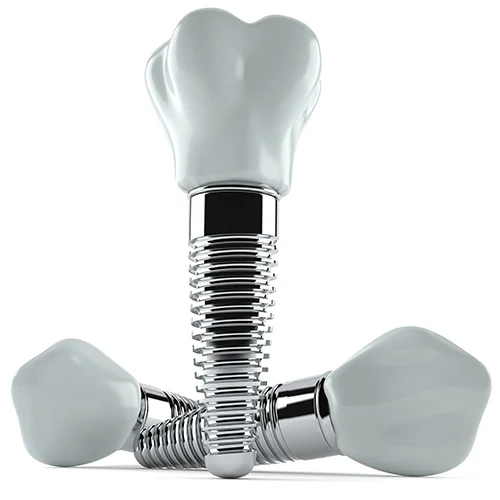
Dental implants
Replace one, several or all missing teeth with fixed teeth that look, feel and chew like your own.Learn more
Dentures
Full, partial or implant-retained removable teeth, made over several fittings and adjusted to your mouth.Learn more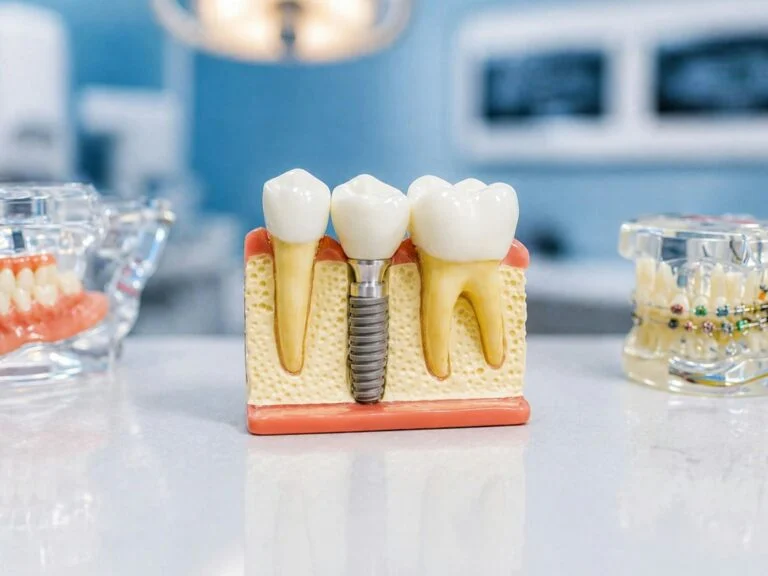
Bone graft & sinus lift
Rebuilding thin or shrunken jawbone so an implant can be placed securely.Learn moreFree photo assessment
Get your personal treatment plan and price
Tell us what you would like to change and add a few photos. A dentist — not a sales agent — reviews your case and replies within 24 hours.
- Free and without obligation
- Fixed price in writing before you travel
- Reply in English, German, Russian or Turkish
- Your photos are used only for your treatment plan