
Treated by a periodontology specialist
Gum disease treatment in Antalya, Turkey
Gum disease is a bacterial infection of the gums and of the bone that holds your teeth. Caught early, as gingivitis, it is fully reversible; once bone has been lost, as periodontitis, it can be stopped and kept under control, but the lost bone does not simply grow back. At Lumos, gum treatment is planned and carried out by Uzm. Dt. Mehmet Ercan, a specialist in periodontology. Assessment and deep cleaning usually take 1–3 days in Antalya.
Medically reviewed by Uzm. Dt. Mehmet Ercan ·
- Assessment + deep cleaning
- 1–3 days
- Re-evaluation
- After 6–8 weeks
- Anaesthesia
- Local
- Treated by
- Periodontology specialist
- Surgery
- Only if needed
- Maintenance
- Every 3–6 months
Gingivitis and periodontitis: what the difference is
Gum disease starts with plaque, the film of bacteria that forms on the teeth every day and inflames the gums if it is not removed. Over time plaque hardens into tartar, which a toothbrush cannot remove, and the bacteria move below the gum line.
| Stage | What happens | Can it be reversed? |
|---|---|---|
| Gingivitis | Red, swollen gums that bleed when you brush. No bone has been lost. | Yes, fully, with cleaning and daily home care |
| Early periodontitis | The gum detaches from the tooth and forms a pocket; the first millimetres of bone are lost. | It can be stopped; lost bone does not return on its own |
| Moderate periodontitis | Deeper pockets, more bone loss, gums start to recede. | It can be stopped; some defects can be partly rebuilt |
| Advanced periodontitis | Much of the supporting bone is gone; teeth become loose, drift or have to be removed. | Some teeth can be kept, others cannot |
Periodontitis is chronic: treatment controls it, maintenance keeps it controlled.
Signs to look out for
- Gums that bleed when you brush, floss or eat
- Red, swollen or tender gums
- Gums that recede, so the teeth look longer or gaps appear between them
- Bad breath or a bad taste that does not go away
- Teeth that feel loose, move or change position
- Pus between the teeth and gums, or a change in how your teeth meet when you bite
Gum disease often causes no pain until late, so many people do not notice it. Smoking narrows the blood vessels in the gums, so smokers may see little or no bleeding even when the disease is active.
Why your gums come first: before veneers, crowns or implants
Veneers, crowns and implants all depend on healthy gums and bone. Inflamed gums bleed during preparation and can shrink after treatment, leaving dark edges or gaps at the margins of new restorations. Around implants, untreated gum disease increases the risk of infection and bone loss.
That is why every plan at Lumos includes a gum check. If gum disease is found, it is treated before cosmetic or implant work. In some cases this changes the order of your trips; your plan explains it before you travel.
Why a specialist in periodontology
Periodontology is the dental specialty for the gums and the bone around teeth and implants. A specialist (Uzm. Dt. in Türkiye) has completed a full-time postgraduate programme of several years, usually 3–4, after dental school, focused on diagnosing and treating gum disease, gum and bone surgery and implant placement.
At Lumos, your gums are assessed and treated by Uzm. Dt. Mehmet Ercan, who also plans the clinic's implants, so one specialist decides which teeth can be kept and how the gums and bone are treated.
How gum disease is diagnosed
- Medical history: diabetes, smoking and medication affect the gums.
- Pocket measurement (probing): a thin, blunt instrument with millimetre markings measures the space between gum and tooth at several points around every tooth. Healthy pockets are about 1–3 mm; 4 mm or more usually means disease.
- Bleeding, recession and mobility: recorded for each tooth.
- X-rays: a panoramic X-ray shows the bone level along all teeth; a 3D cone-beam CT scan is taken where the bone needs to be measured in more detail.
You receive the diagnosis and plan in writing.
Treatment options compared
| Treatment | Used for | Anaesthesia | Time in the chair |
|---|---|---|---|
| Professional cleaning | Gingivitis, maintenance | Usually none | 30–60 minutes |
| Scaling and root planing (deep cleaning) | Periodontitis, pockets of 4 mm or more | Local | 1–2 sessions |
| Flap surgery | Deep pockets that remain after deep cleaning | Local | About 1–2 hours per area |
| Regenerative procedure | Selected bone defects around a tooth | Local | About 1–2 hours per area |
| Gum graft | Gum recession, thin gums | Local | About 1–2 hours |
| Gum contouring | Gummy smile, uneven gum line | Local | About 1 hour |
Deep cleaning: scaling and root planing
This is the main treatment for periodontitis, and for many patients the only active treatment they need. Under local anaesthesia, tartar and bacteria are removed from the tooth surfaces and from the roots inside the pockets, and the root surfaces are smoothed so the gum can heal against them. The mouth is usually treated in one or two sessions.
Surgical options
If deep pockets remain at the re-evaluation, a periodontist may suggest surgery for those areas only:
- Flap surgery: the gum is gently lifted so the roots and bone can be cleaned under direct view, then stitched back in a position that is easier to keep clean.
- Regenerative procedures: in certain bone defects, bone graft material, a membrane or biological materials are placed to help the body rebuild part of the lost bone and attachment. Your X-rays show whether a defect is suitable.
- Gum grafts: for recession, a thin piece of tissue, usually from the palate, or a substitute material is placed to cover exposed roots or thicken thin gums.
Gum contouring for cosmetic reasons
When the gums show a lot in your smile, or the gum line is uneven, the gum can be reshaped so the teeth look longer and more even. Where needed, a little bone is reshaped too, so the result stays stable. Gum contouring is often part of a smile makeover and is done on healthy gums only, before veneers or crowns are made.
Gum disease around implants (peri-implantitis)
Implants cannot decay, but the gum and bone around them can become infected in the same way as around natural teeth. The early, reversible stage is called peri-implant mucositis: bleeding and swelling of the gum without bone loss. If it progresses, peri-implantitis destroys the bone around the implant and can lead to its loss.
People with a history of periodontitis, smokers and people who cannot clean around their implants are at higher risk. Treatment ranges from professional cleaning of the implant surface to surgical cleaning and, in selected cases, bone regeneration. Treating gum disease before implants are placed, and regular maintenance afterwards, lower the risk.
Diabetes, smoking and your general health
- Diabetes: the link works in both directions. Poorly controlled diabetes makes gum disease more severe, and active gum disease can make blood sugar harder to control. Studies show that gum treatment can lead to a modest improvement in blood sugar levels.
- Smoking: smoking is one of the strongest risk factors for periodontitis. Smokers respond less well to treatment and are more likely to lose teeth. Stopping, or at least cutting down, improves healing.
Your days in Antalya, step by step
Assessment and deep cleaning: usually 1–3 days
- Day 1: examination, pocket measurement, X-rays and your written diagnosis and plan. Mild cases can be cleaned the same day.
- Day 1–2: deep cleaning under local anaesthesia, usually in one or two sessions.
- Day 2–3: a short check, home-care instructions and the right sizes of interdental brushes for your teeth.
Re-evaluation after 6–8 weeks
The gums need 6–8 weeks to heal before the pockets can be measured again. Your dentist at home can do this with the chart we give you, or you can combine it with a later visit to Antalya, for example for implants or veneers.
If surgery is needed
Gum surgery is usually done after the re-evaluation, not on the first trip, and adds a few days in Antalya. Stitches are either removed after about 7–14 days or dissolve on their own; your plan states which and who removes them.
What affects the cost
The price depends on how many teeth and areas are affected, whether deep cleaning alone is enough, and whether surgery, graft or regenerative materials are needed. Your written plan lists each step and its price before you travel, and the re-evaluation and surgery are priced separately so you only pay for what you need. See our prices for what is included.
Risks and disadvantages
- Sensitivity: teeth are often sensitive to cold for a few days to a few weeks after deep cleaning, as the roots are no longer covered by tartar. A sensitive toothpaste helps.
- Recession may become more visible: as swelling goes down, the gums shrink. Teeth can look longer and small dark gaps can appear between them. This is a sign of healing, not a mistake, but it can be a cosmetic change you notice.
- Lost bone is not restored by deep cleaning. Regenerative surgery can rebuild part of it in suitable defects only.
- Surgery adds swelling, some discomfort and a small risk of infection; a graft does not always take fully.
- Relapse: without good home care and regular maintenance, the disease returns.
If you only have gingivitis, the more conservative option is enough: a professional cleaning and more thorough daily cleaning at home.
Aftercare and what you can do at home
- Brush twice a day for two minutes with a soft brush, angled towards the gum line.
- Clean between your teeth every day with interdental brushes or floss, in the sizes we show you.
- Expect some bleeding in the first 1–2 weeks of daily cleaning; it should then decrease. Do not stop because of it.
- Avoid smoking, especially in the first weeks after treatment.
- After surgery, eat soft food, do not brush the treated area until your dentist says so and use the rinse you are given.
Take your written report home and show it to your dentist. It contains the pocket chart, the X-rays and the treatment done, so your progress can be followed.
Long-term maintenance
Once periodontitis is under control, the aim is to keep it there. Most patients need a professional maintenance cleaning every 3–6 months, depending on how severe the disease was and how well they clean at home. With regular maintenance, many teeth affected by periodontitis can be kept for decades.
How it works
From the first photo to your new smile
- 1
Send your photos
Share a few smile photos or an X-ray through our form or on WhatsApp.
- 2
Get your plan and price
Our dentists reply within 24 hours with a personal treatment plan, a fixed price and how many days you need.
- 3
Fly to Antalya
We pick you up at Antalya Airport and drive you between your hotel and the clinic.
- 4
Smile, with aftercare
You fly home with a written guarantee and our team stays in touch for follow-up.
Gum treatment: frequently asked questions
Can gum disease be cured?
Gingivitis can be fully reversed. Periodontitis can be stopped and kept under control, but it is a chronic condition and lost bone does not grow back on its own. Regular maintenance prevents it from returning.
Does deep cleaning hurt?
It is done under local anaesthesia, so you feel pressure and vibration but not pain. Afterwards the gums can be tender and the teeth sensitive to cold for a few days; ordinary painkillers are usually enough.
How many days do I need in Antalya for gum treatment?
Assessment and deep cleaning usually take 1–3 days. The gums are measured again after 6–8 weeks, either by your dentist at home or on a later visit. If surgery is needed, it adds a few days, usually on a later trip.
Will my loose teeth become firm again?
Often they become firmer once the inflammation settles, but teeth that have lost a lot of bone may stay somewhat mobile. Your dentist tells you after the examination which teeth can be kept and which cannot.
Why do my teeth look longer after gum treatment?
Swollen gums cover part of the tooth. As the inflammation heals, the gum shrinks back to its real level, so more of the tooth and sometimes small gaps between the teeth become visible.
Do I need gum treatment before veneers or implants?
If you have active gum disease, yes. Veneers, crowns and implants need healthy gums and bone to look good and last. In mild cases the gums can be treated on the same trip.
Can implants get gum disease?
Yes. Inflammation around implants is called peri-implant mucositis and, when bone is lost, peri-implantitis. Good home care and regular professional cleaning lower the risk, especially if you have had periodontitis before.
Patient reviews
What our patients say on Google
Related treatments
You may also be interested in
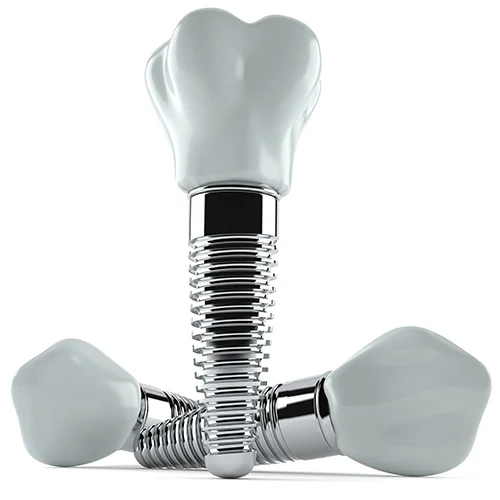
Dental implants
Replace one, several or all missing teeth with fixed teeth that look, feel and chew like your own.Learn more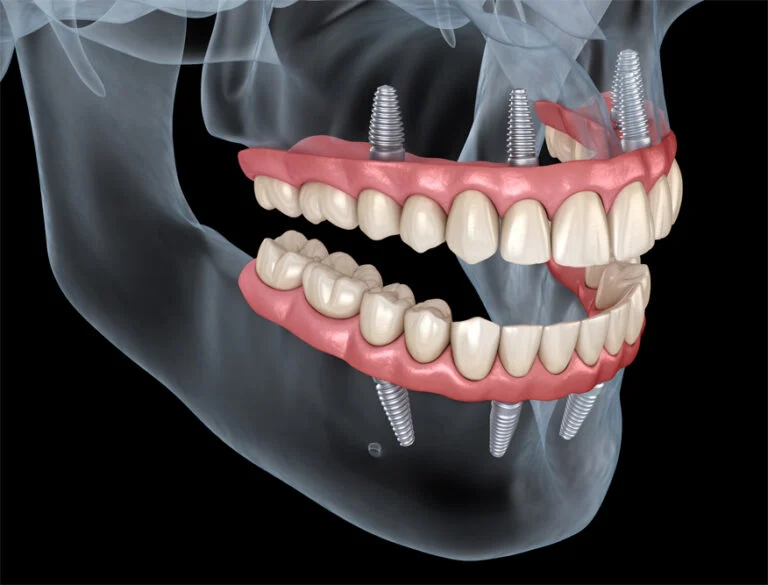
All-on-4 & All-on-6
A complete fixed set of teeth on four or six implants per jaw — for missing or failing teeth and loose dentures.Learn more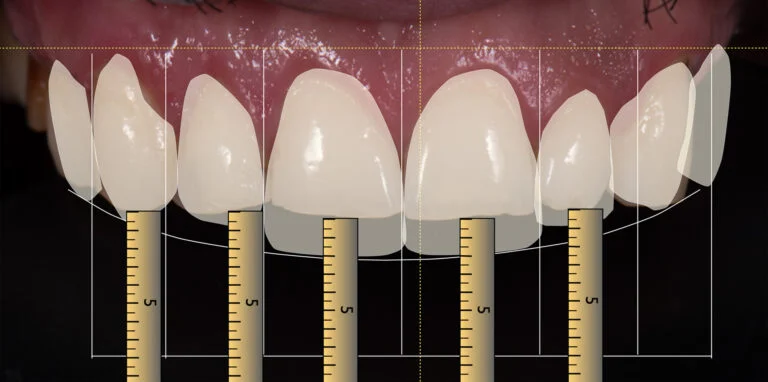
Smile makeover
A complete plan — whitening, veneers, crowns or implants — designed digitally around your face.Learn moreFree consultation
Get your personal treatment plan and price
Tell us what you would like to change and add a few photos. A dentist — not a sales agent — reviews your case and replies within 24 hours.
- Free and without obligation
- Fixed price in writing before you travel
- Reply in English, German, Russian or Turkish
- Your photos are used only for your treatment plan