Turkey teeth: what goes wrong, and how to avoid it
“Turkey teeth” is a British nickname for smiles where healthy teeth were filed down to small stumps and covered with full crowns, often in a very white, uniform shade. The problem is not the country but the method: crowns used where whitening, bonding or thin veneers would have been enough, planned in a hurry and fitted on gums that were not healthy.

What people mean by “Turkey teeth”
The term spread in the UK in 2021 and 2022, when social media and television showed young people coming home with very white, very even new teeth, and some of them later with pain, sensitivity and inflamed gums.
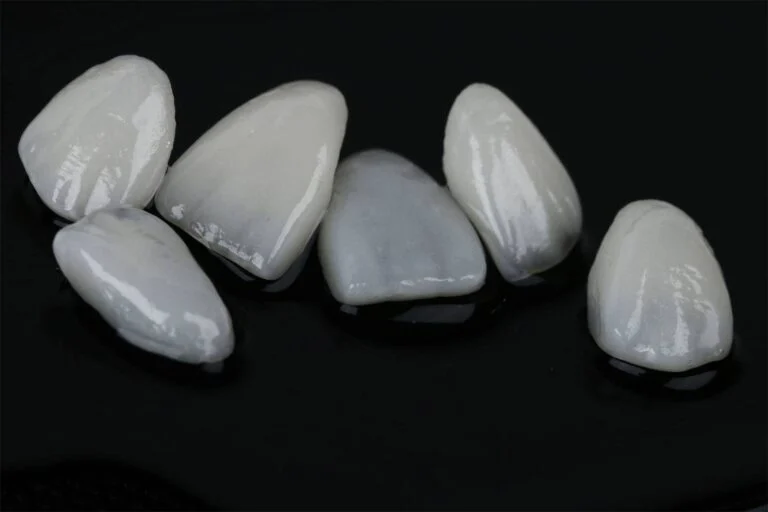
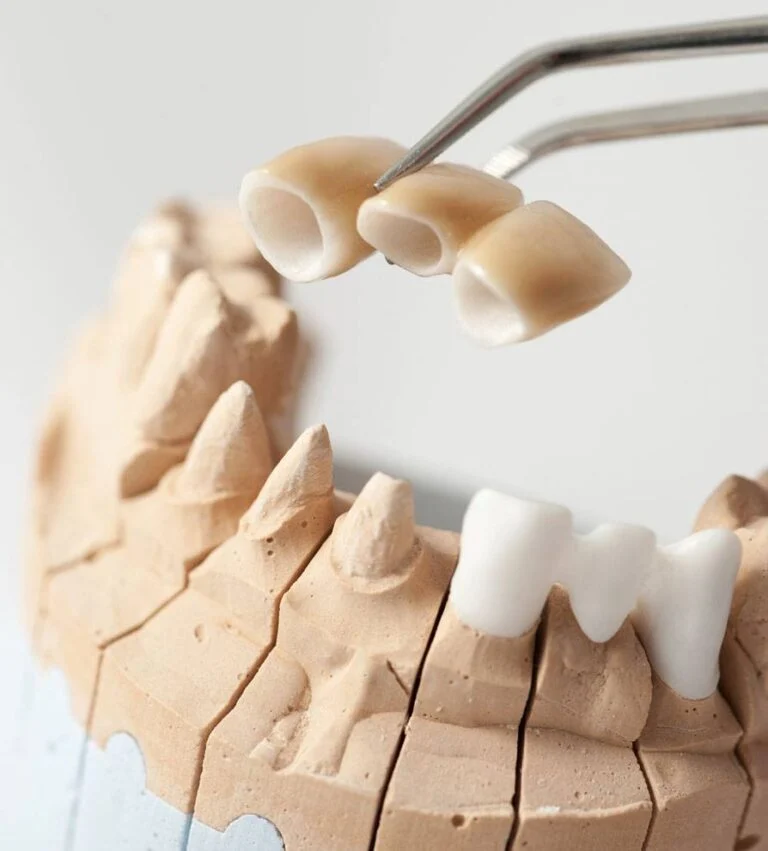
Many of them had been told they were getting “veneers”. What they actually received were full crowns: caps that cover the whole tooth and need much more of it to be removed. The two words are often mixed up in advertising, so it is worth knowing the difference before you compare offers.
Crowns and veneers are not the same treatment
| Veneer | Crown | |
|---|---|---|
| What it covers | The front surface and edge of the tooth | The whole tooth, all round |
| Tooth removed | Usually 0.3–0.7 mm of enamel, sometimes none | About 1–2 mm on every side |
| Share of the visible tooth removed* | About 3–30% | About 63–72% |
| Afterwards | Most of the tooth stays intact | The tooth will always need a crown |
| Right for | Healthy teeth that need a new shape or colour | Teeth with large fillings, cracks, root canal treatment or heavy wear |
* Edelhoff and Sorensen, Journal of Prosthetic Dentistry, 2002.
Neither is good or bad in itself. A crown is the right restoration for a broken or heavily filled tooth. The problem is a crown on a healthy tooth whose only fault was its colour or a small gap.
What can go wrong
- Sensitivity and nerve damage. Preparing a tooth for a crown brings the drill close to the nerve, especially on small front teeth and in young patients. Some of these teeth stay sensitive, and some lose their nerve in the following years and need a root canal treatment.
- Inflamed or receding gums. A crown edge that sits too deep under the gum, does not fit closely or is too bulky traps plaque. The gum bleeds, swells or recedes, and a dark line or a gap between the teeth can appear.
- Bite problems. Making all teeth longer or wider in one go changes the bite. Jaw pain, chipped crowns or headaches can follow.
- An unnatural look. Very white, opaque, identical teeth that are too long or too thick look artificial, especially next to lower teeth that were left untouched.
- A lifelong commitment. A crown lasts many years, but not for ever. Each replacement removes a little more tooth.
Gum disease that is not treated before crowns or veneers are fitted makes all of these more likely.
Why it happens
- Too little time. Twenty crowns in three or four days leaves no time for a mock-up, a try-in or a careful check of fit and bite.
- A package, not a plan. When the offer is “a Hollywood smile for one price” before anyone has seen your teeth, every tooth tends to get the same treatment.
- Crowns are easier to make uniform. Covering the whole tooth hides every difference between teeth, so it can be the faster route to a very even result.
- No gum check. Crowns and veneers fitted on inflamed gums start with a poor fit.
- The shade. A very white shade chosen from a photo of someone else's smile can look wrong on your face. Seeing it as a mock-up first helps.
None of this is specific to Türkiye. The same mistakes happen anywhere treatment is rushed or sold as a package. What matters is the clinic and the plan, not the country.
Questions to ask before you book
- Which teeth get a veneer, which a crown, and why? Ask for a tooth-by-tooth plan.
- How much of each tooth will be removed?
- Will I see a mock-up of the new shape and shade in my mouth before any tooth is prepared?
- Are my gums healthy enough, and who checks them?
- Would whitening or composite bonding be enough for some teeth?
- Who prepares my teeth, and what is their title?
- Which ceramic is used, E-max or zirconia, and is it named in my plan?
- How many days are planned, and is there a try-in before the final cementation?
- What happens if something chips, comes loose or hurts after I fly home?
Our 10-point safety checklist covers licences, dentists and red flags in more detail.
If you already have problems with your crowns
Do not wait for the pain to pass. See a dentist at home, or send us photos and an X-ray. What can be done depends on the cause:
- Bleeding or swollen gums around the crowns: professional cleaning and gum treatment. If the crown edges are the cause, new crowns that fit better.
- Pain when biting or a throbbing tooth: an X-ray shows whether the nerve is inflamed. A root canal treatment can often save the tooth.
- A bite that feels wrong, or chipping: the bite can be adjusted and broken crowns replaced.
- Crowns that look too white, too long or too bulky: they can be replaced with crowns of a more natural shape and shade.
What cannot be undone is the tooth that was removed. Replacement crowns can look and fit better, but the teeth underneath will always need crowns.
How we plan veneers and crowns
At Lumos Dental Clinic in Konyaaltı, Antalya, your plan starts with your photos and, if you have one, an X-ray. You receive a written plan that lists each tooth, whether it gets a veneer or a crown and why, the material and the number of days in Antalya.
- Your gums are checked first. If they are inflamed, they are treated before any veneer or crown. Gum treatment is led by Uzm. Dt. Mehmet Ercan, a specialist in periodontology.
- The new teeth are designed digitally and tried in as a mock-up, so you see the shape and shade before any tooth is prepared.
- Where the enamel allows it, we use thin E-max veneers and keep the preparation in the enamel. Crowns are for teeth that need them.
- If whitening or composite bonding reaches your goal, your plan says so.
Send your photos and you receive your written plan within 24 hours.
Frequently asked questions
Are Turkey teeth veneers or crowns?
Most cases shown in the UK media were full crowns, not veneers. A crown covers the whole tooth and needs much more of it to be removed; a veneer covers only the front surface.
Can Turkey teeth be reversed?
Not completely. The removed tooth does not grow back, so crowned teeth will always need crowns. Poor crowns can be replaced with better-fitting, more natural-looking ones, and gum problems can be treated.
How long do crowns and veneers last?
Well-made ceramic crowns and veneers commonly last 10–15 years or longer with good cleaning and regular check-ups. Composite bonding lasts about 4–7 years.
Is it safe to get veneers in Turkey?
Yes, at a licensed clinic with a named dentist, a tooth-by-tooth written plan and enough days for a mock-up and a try-in. The questions above help you compare clinics.